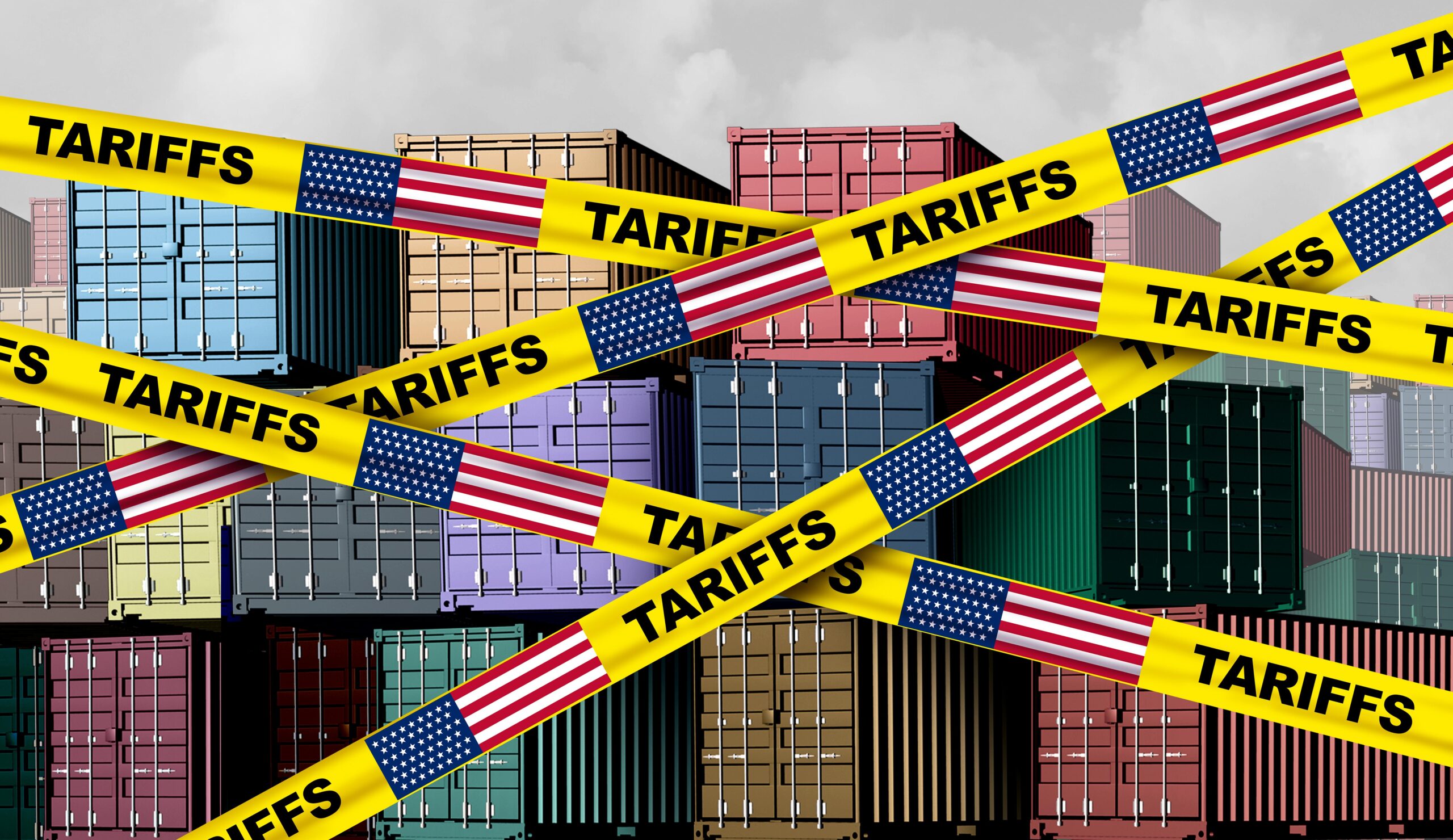
Trump tariffs struck down by US Supreme Court
Jacob Grattage, Reporter, Business & Accountancy Daily
In a rare rebuke of presidential power, US Supreme Court invalidates president Trump’s Liberation Day tariffs in a majority ruling 6-3
Historically tariffs would typically need to be approved by Congress, however when Trump came into power he argued he had the right to impose them using a 1977 law called the International Emergency Economic Powers Act (IEEPA).
In a six to three majority ruling, the Supreme Court has ruled that tariffs on products entering the US was not allowed under IEEPA.
President Trump reacted in a press conference calling the decision a ‘disgrace’, describing the case as important to him and a beacon of economic prosperity, adding it was a ‘terrible decision’.
The ruling was authorised by chief justice John Roberts, who was joined by two fellow conservatives and three liberal justices in the majority. In the ruling, Roberts wrote: ‘We hold that IEEPA does not authorise the president to impose tariffs.’
The 170-page document explained: ‘Against that backdrop of clear and limited delegations, the government reads IEEPA to give the president power to unilaterally impose unbounded tariffs and change them at will. That view would represent a transformative expansion of the President’s authority over tariff policy.’
The ruling continued: ‘Accordingly, the president must ‘point to clear congressional authorization” to justify his extraordinary assertion of that power.’
Rebutting Trump’s emergency-based argument, the ruling stated: ‘Those precedents are facially inapposite, as all agree the president lacks inherent peacetime authority to impose tariffs.
Continuing it read: ‘Inferences from wartime precedents through multiple iterations of… IEEPA cannot support, much less clearly support, a reading of IEEPA that includes the distinct power to impose tariffs.’
Nigel Green, CEO of deVere Group said: ‘This ruling strikes at the core of the administration’s economic doctrine. Trade confrontation was positioned as the engine of renewed domestic strength.
‘Instead, it now faces constitutional limits, market scrutiny, and diminishing economic returns.’
Despite the political blow, Green argues markets are unlikely to respond with sustained panic.
He said: ‘Investors differentiate between political theatre and earnings power. Equity markets are forward-looking, and they are being supported by strong balance sheets in major US corporations, continued capital expenditure in AI and tech, and expectations that policymakers will ultimately avoid extreme outcomes.’
Green added: ‘Large-cap equities, particularly in AI infrastructure, semiconductors, and cloud computing, continue to attract global capital.’
This is probably not the end of the road in the Trump tariff saga, as the president is still able to impose tariffs through other laws.
In opposition to the ruling, conservative justice Brett Kavanaugh said in the ruling: ‘The Court’s decision is not likely to greatly restrict presidential tariff authority going forward.
‘But the Court’s decision is likely to generate other serious practical consequences in the near term. One issue will be refunds. Refunds of billions of dollars would have significant consequences for the U. S. Treasury.’
In December 2025, retail giant Costco, began proceedings to sue the US government in an attempt to get a refund of import duties.
On the topic of potential refunds, Kavanaugh wrote: ‘The Court says nothing today about whether, and if so how, the government should go about returning the billions of dollars that it has collected from importers.’
Kavanaugh wrote the process of any refunds ‘is likely to be a “mess,” as was acknowledged at oral argument.’
According to the latest data from US Customs and Border Protection, the US has collected $130bn (£96.3bn) in taxes from the tariffs. It is not clear how and if paid tariffs will be refunded, or what the process would be.